

Bubble CPAP Monitoring
Summary
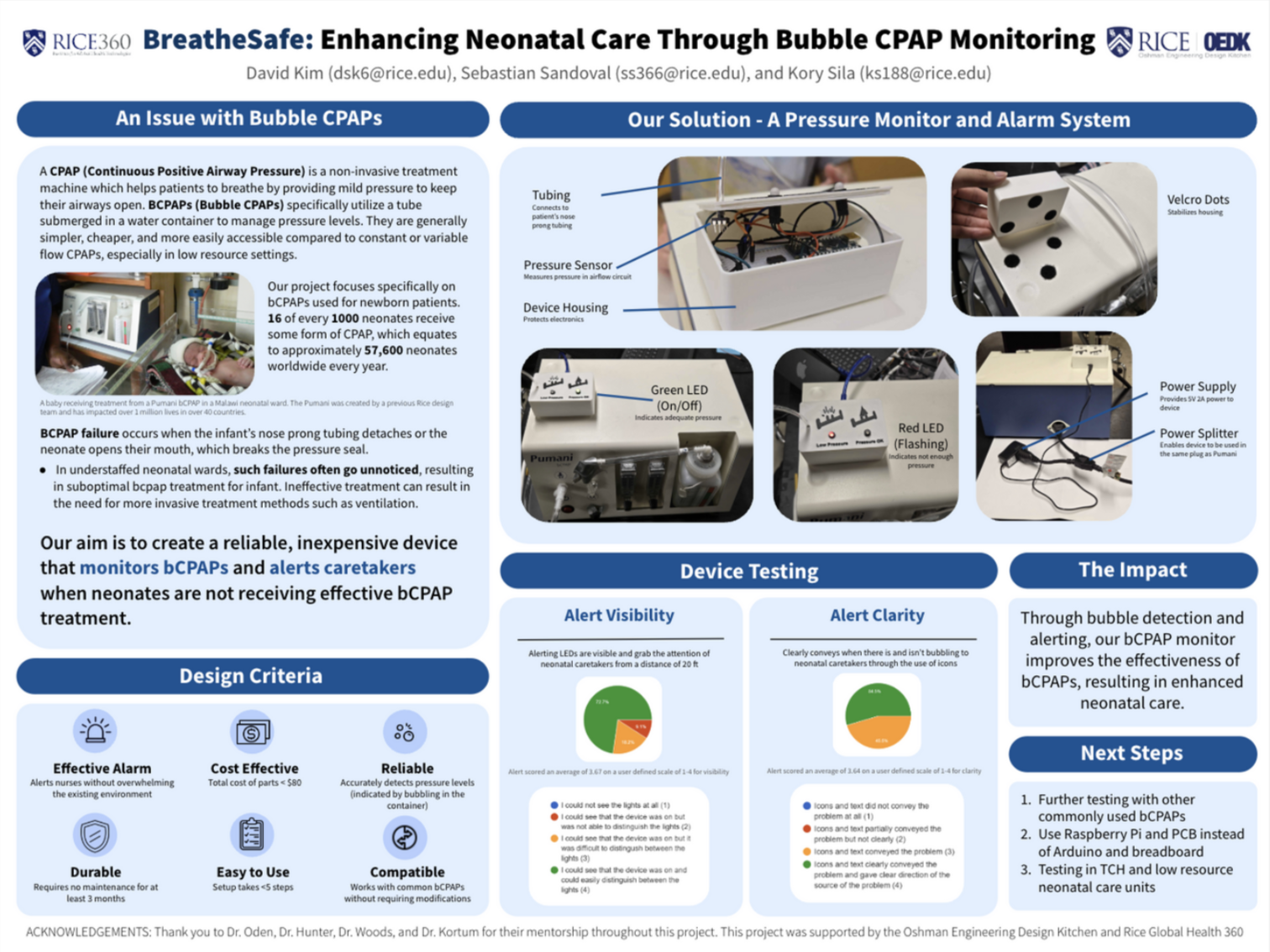
For this project, my team (Team BreatheSafe) designed a low-cost pressure monitoring and alarm system for bubble CPAP devices used in neonatal care. Bubble CPAPs help newborns breathe by maintaining positive airway pressure, but treatment can fail if the nasal prongs detach, the infant opens their mouth, or the pressure seal is otherwise broken. In understaffed neonatal wards, these issues can go unnoticed, which can lead to ineffective treatment.
Our goal was to create an inexpensive device that monitors whether a bubble CPAP system is providing adequate pressure and alerts caregivers when the infant may not be receiving effective treatment. My work focused on sensor testing, prototype fabrication, oscilloscope data collection, MATLAB FFT analysis, 3D printed housing development, icon design, documentation, and project coordination.
Design Criteria
We designed the monitor around the constraints of low-resource neonatal care settings. The device needed to be inexpensive, simple to set up, compatible with existing bubble CPAP systems, and clear enough for caregivers to understand quickly.
Our main design targets were a total parts cost below $80, setup in 5 steps or fewer, an effective visual alarm, reliable pressure detection, and minimal maintenance. We also considered compatibility with common bubble CPAP systems and future data storage as stretch goals.
Iteration 1. Sensor Screening
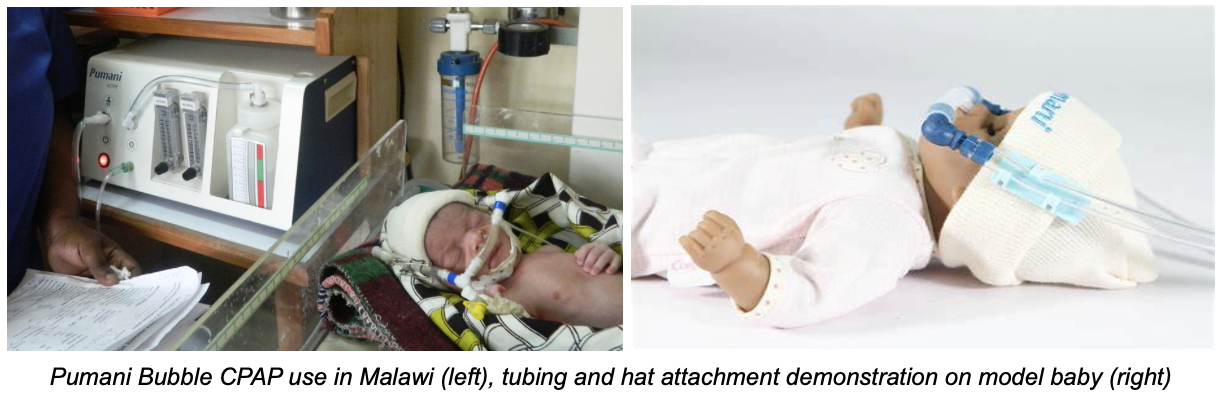
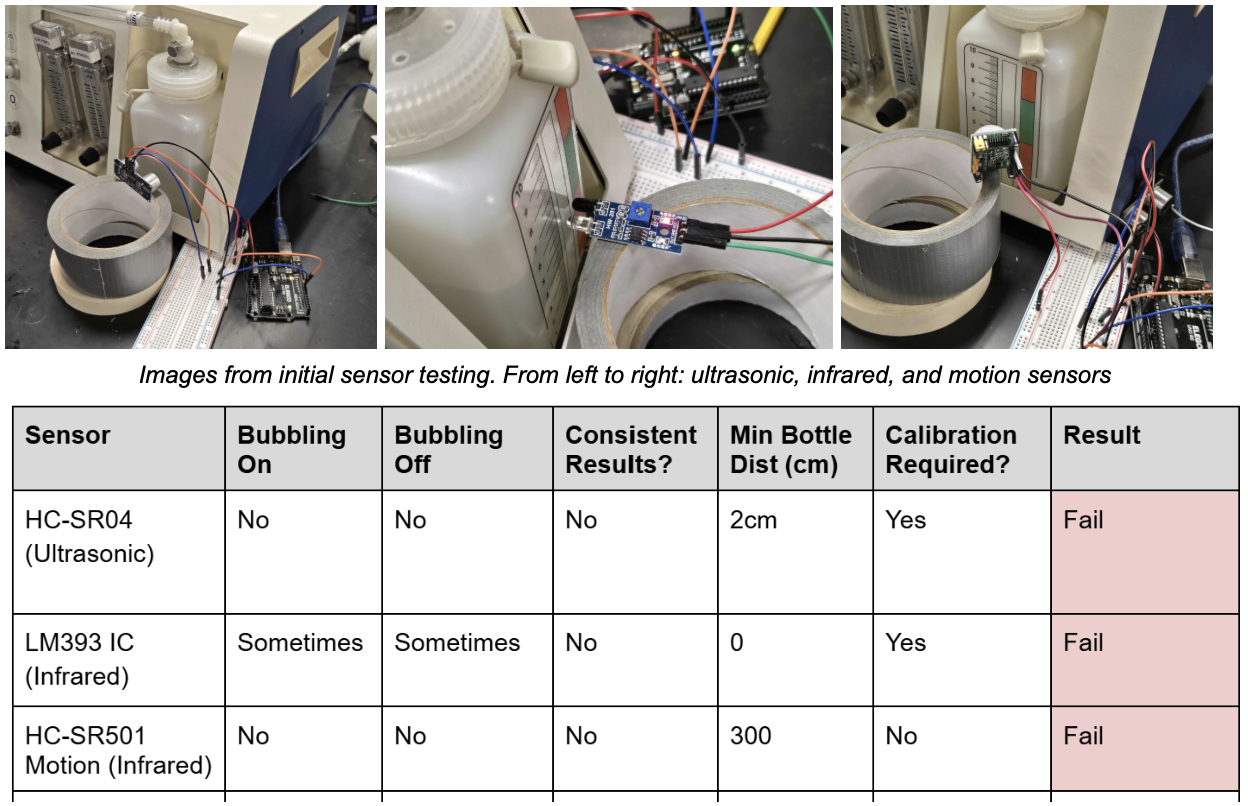
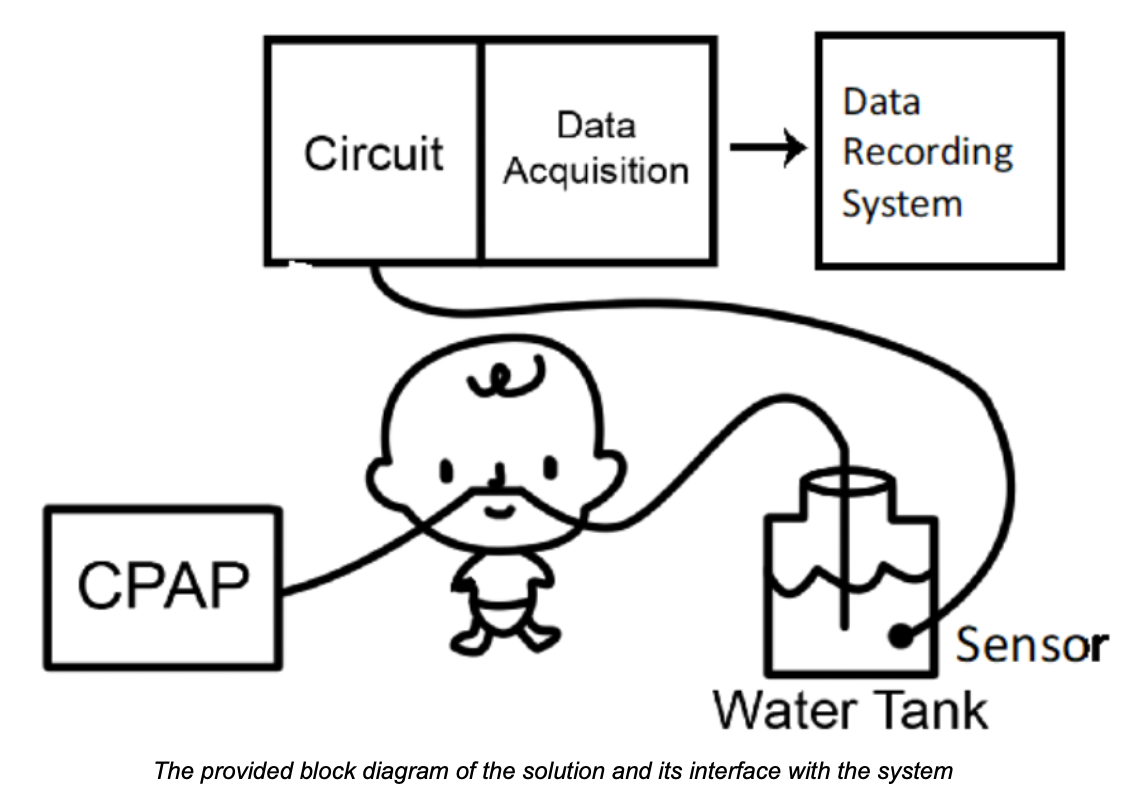
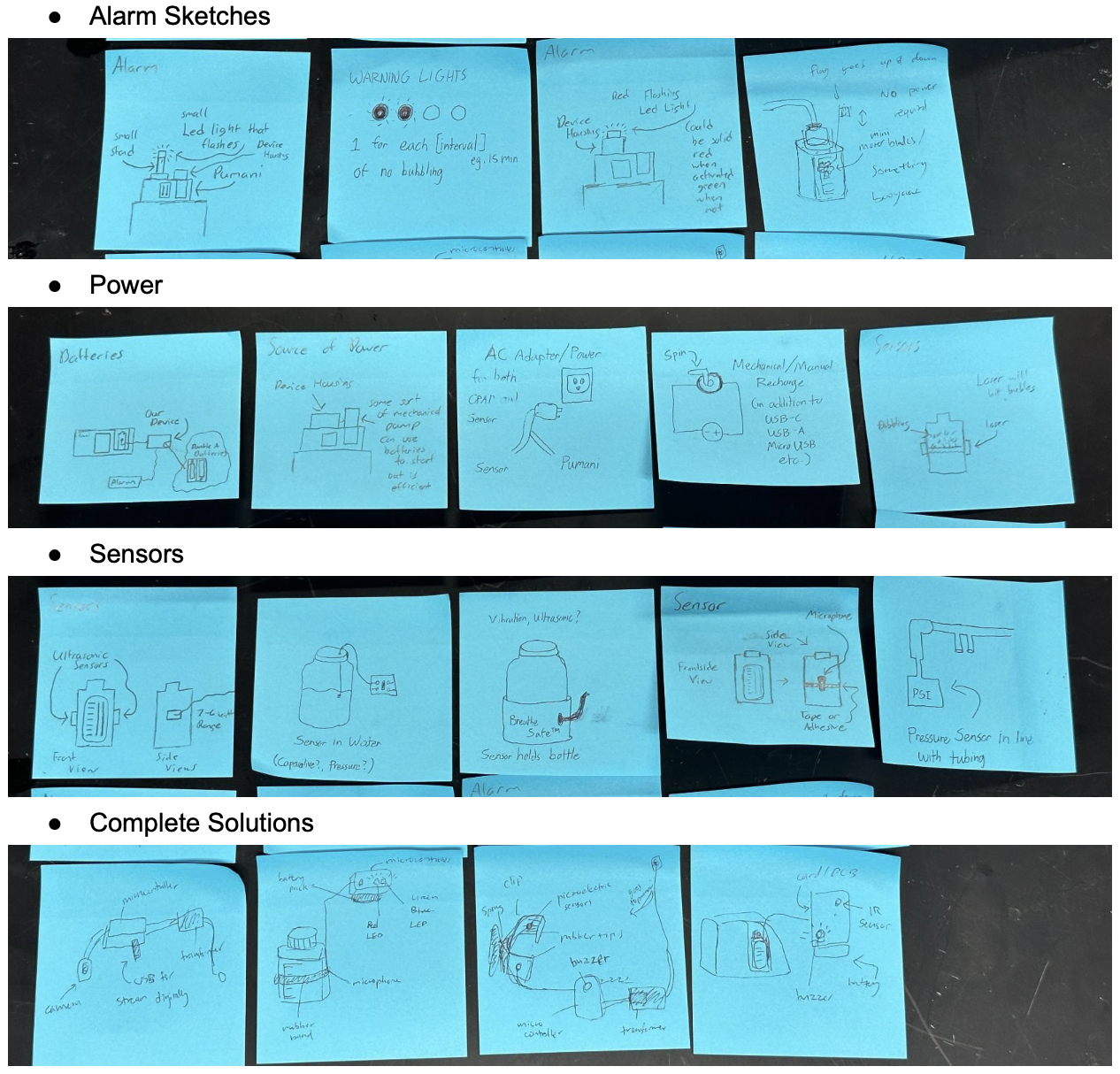
The first stage focused on testing simple ways to detect whether bubbling was occurring in the CPAP water bottle. We tested available ultrasonic, infrared, and motion sensors on the Pumani bubble CPAP system to see if they could distinguish between bubbling and non-bubbling states.
These sensors were easy to prototype, but the results were not consistent enough. The ultrasonic sensor, infrared sensor, and motion sensor all failed to reliably detect bubbling. This helped narrow the project toward more sensitive sensing methods.
Iteration 2. Piezoelectric Sensing and Signal Processing
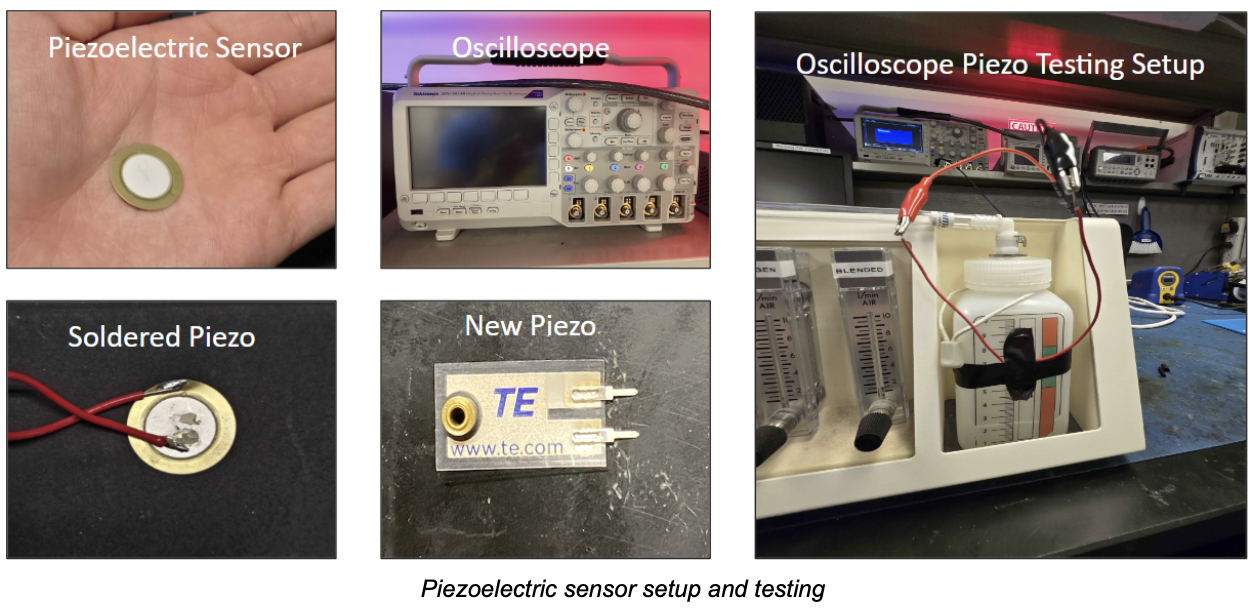
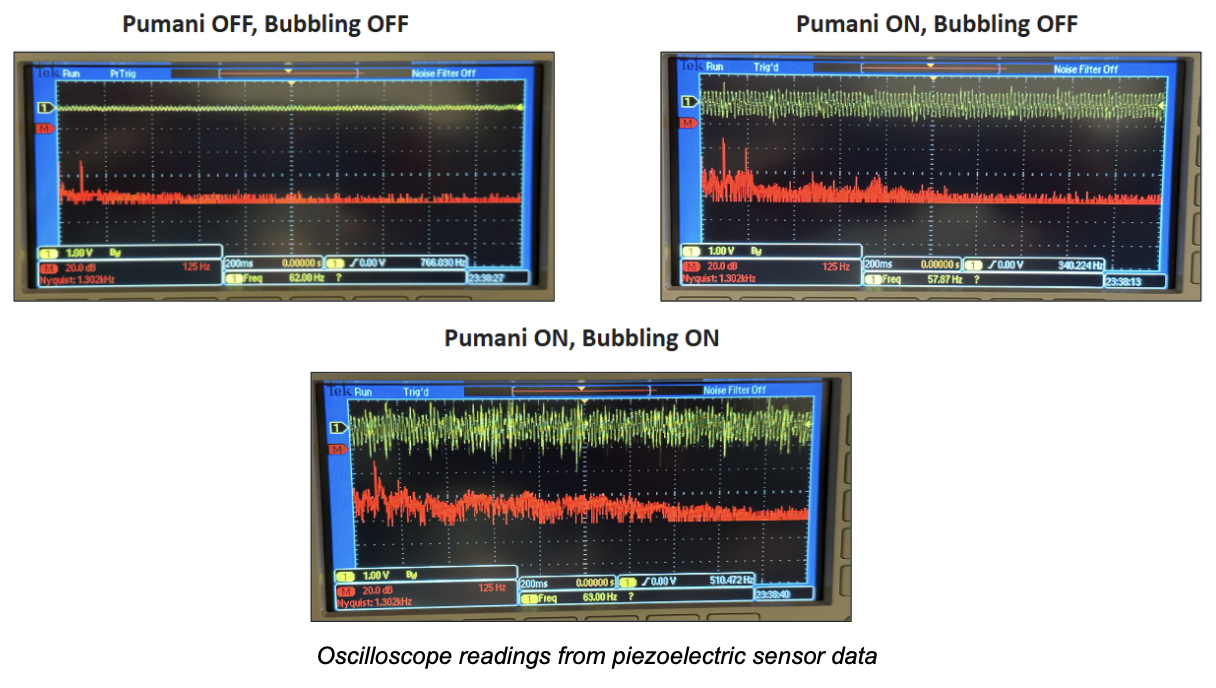
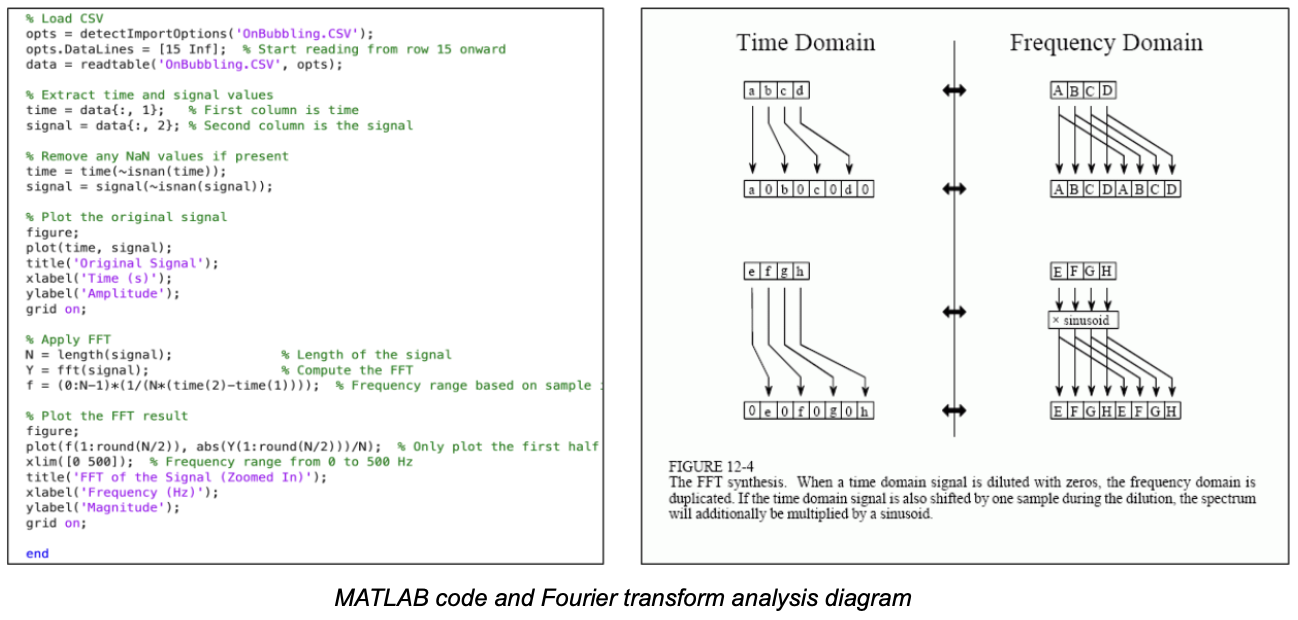
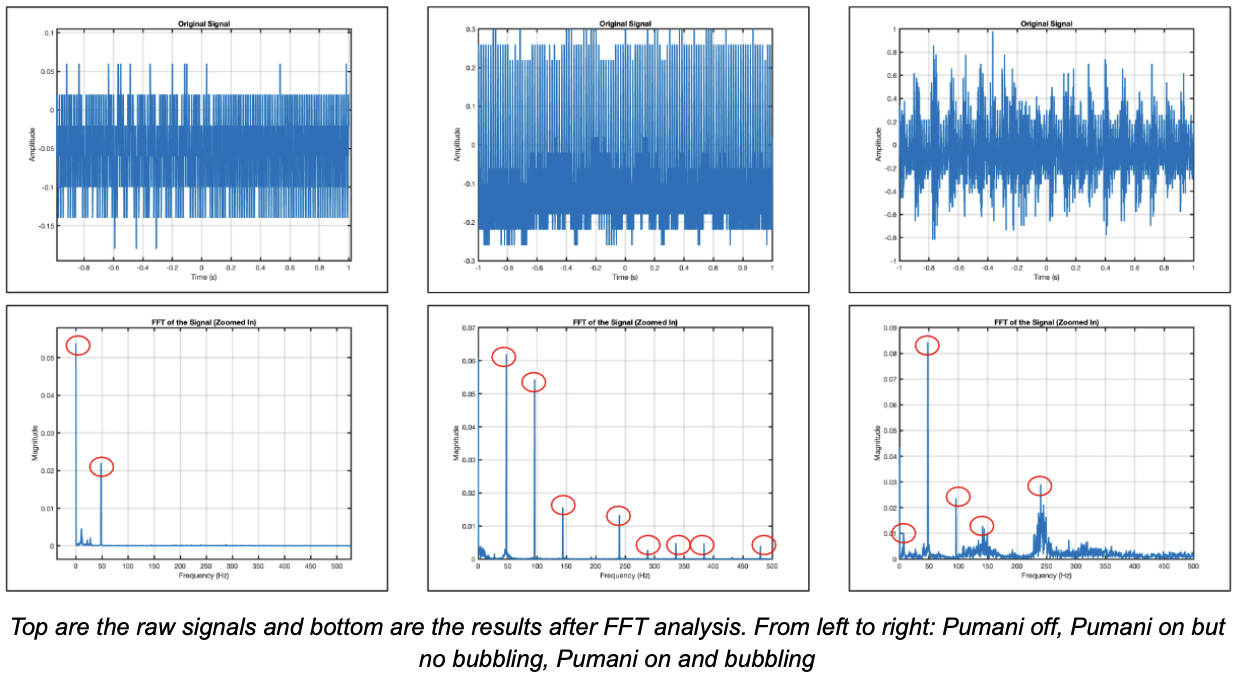
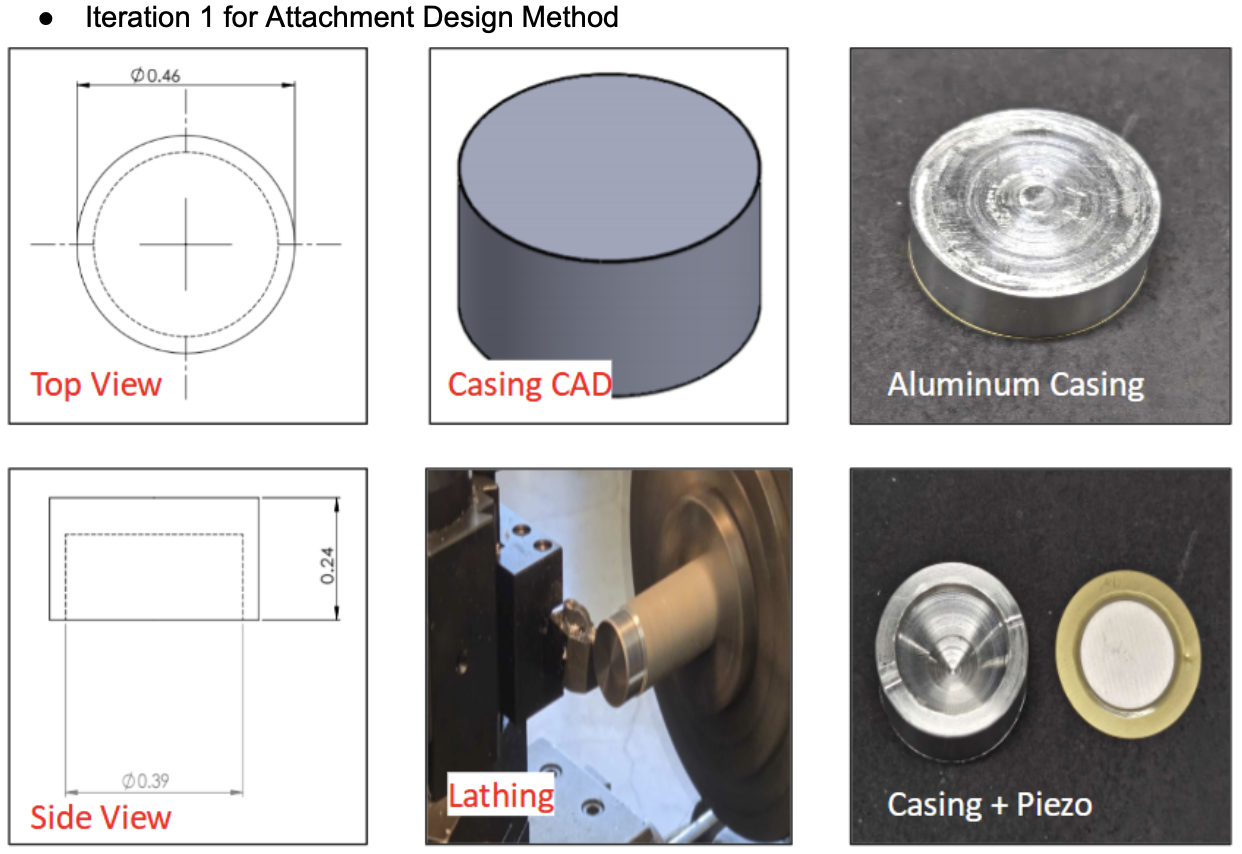
The next stage focused on piezoelectric sensors, which we used to detect vibrations from bubbling in the water bottle. I helped solder the sensors, attach them to different areas of the bottle, run oscilloscope tests, and collect data for bubbling on, bubbling off, and machine off conditions. I then used MATLAB FFT analysis to compare the frequency content of each test case.
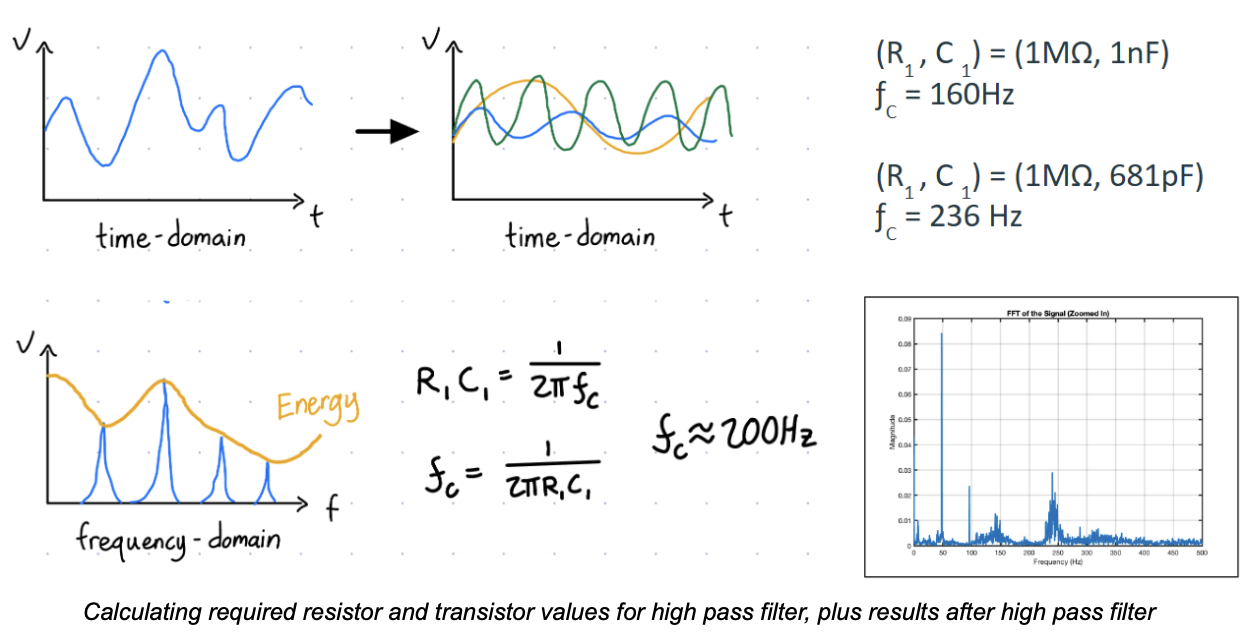
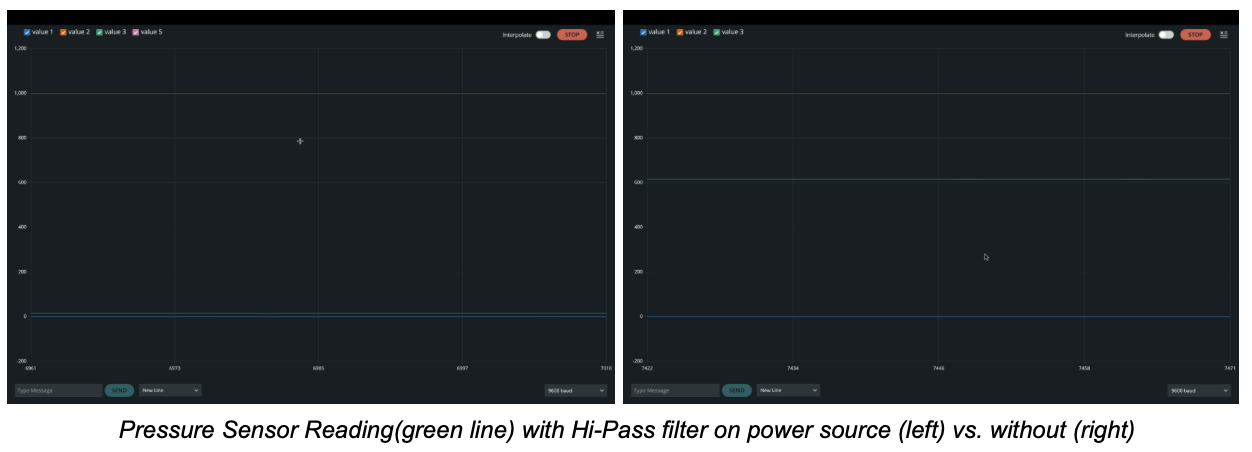
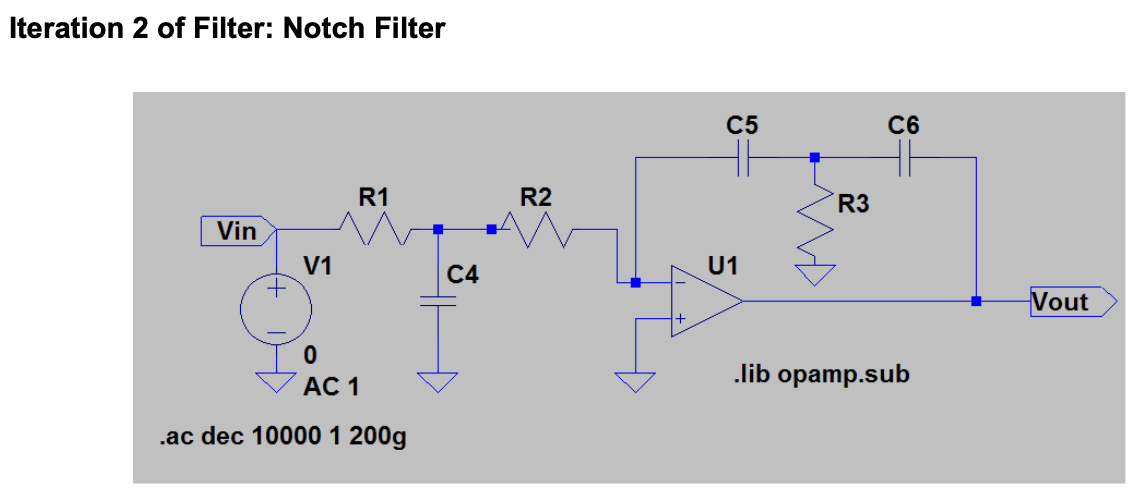
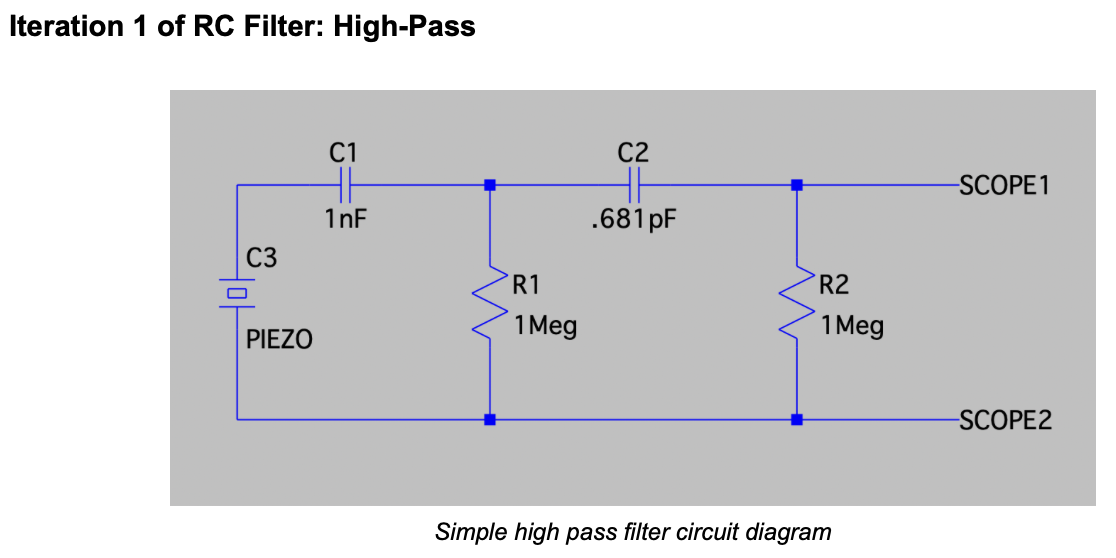
The piezo sensors showed some differences between bubbling and non-bubbling states, but the signal was difficult to separate from machine vibration, electrical noise, and sensor mounting effects. A strong signal near 50 Hz appeared when the machine was running, which made it harder to isolate the bubbling behavior. We tested high-pass and notch filtering approaches, along with improved TE Connectivity piezo sensors, but the signal was still not clean enough for reliable detection.
This iteration was valuable because it showed that a sensor can appear promising in theory but still be too sensitive to noise, placement, and real system behavior. After several rounds of testing and attachment design, we decided to move away from vibration-based sensing and pursue a pressure-based solution instead.
Iteration 3. Selected Pressure Sensor Solution and Alarm Design
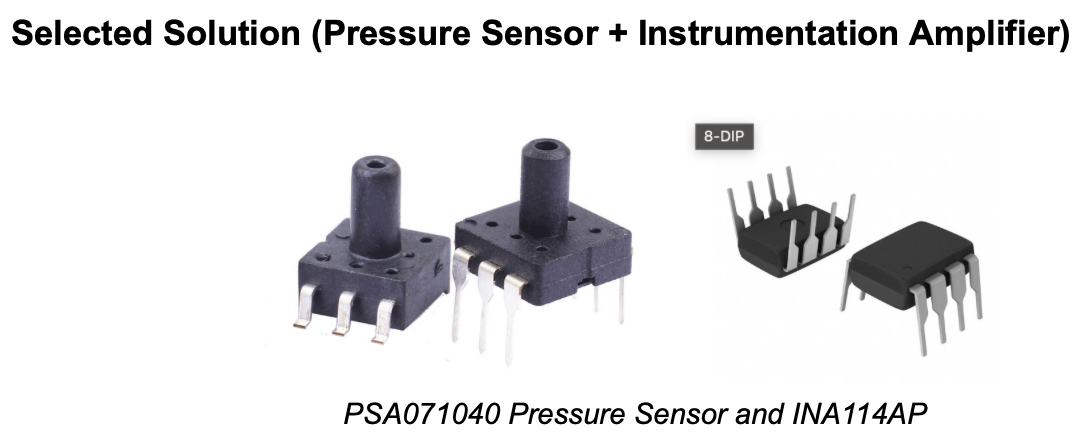
The final design used a pressure sensor placed in line with the bubble CPAP tubing instead of trying to detect bubbling through bottle vibration. This approach was more directly connected to the clinical failure mode because a loose nasal connection, open mouth, or broken seal causes a small pressure change in the patient circuit.
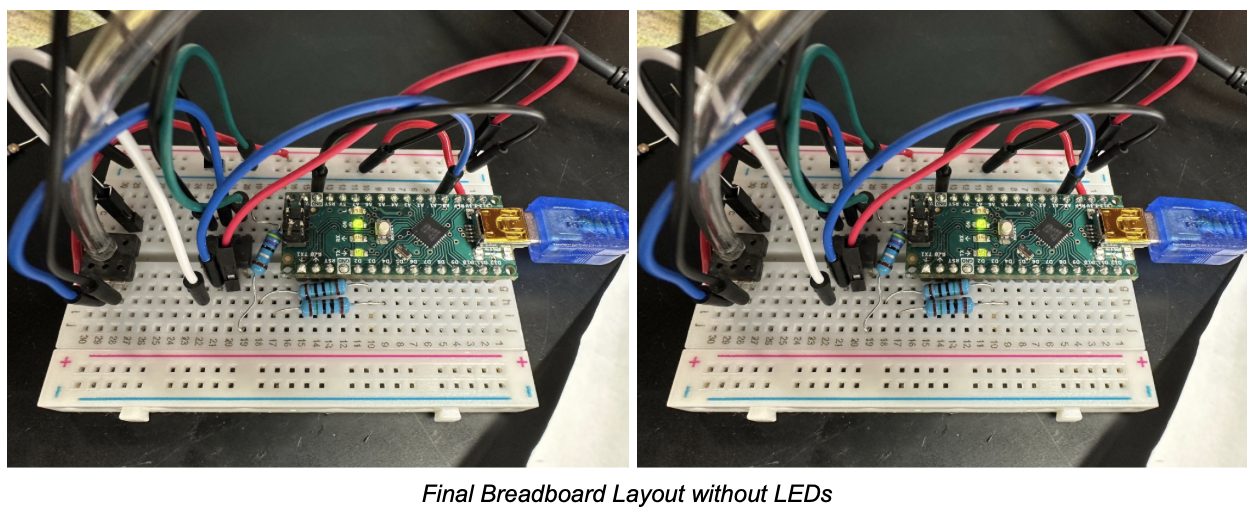
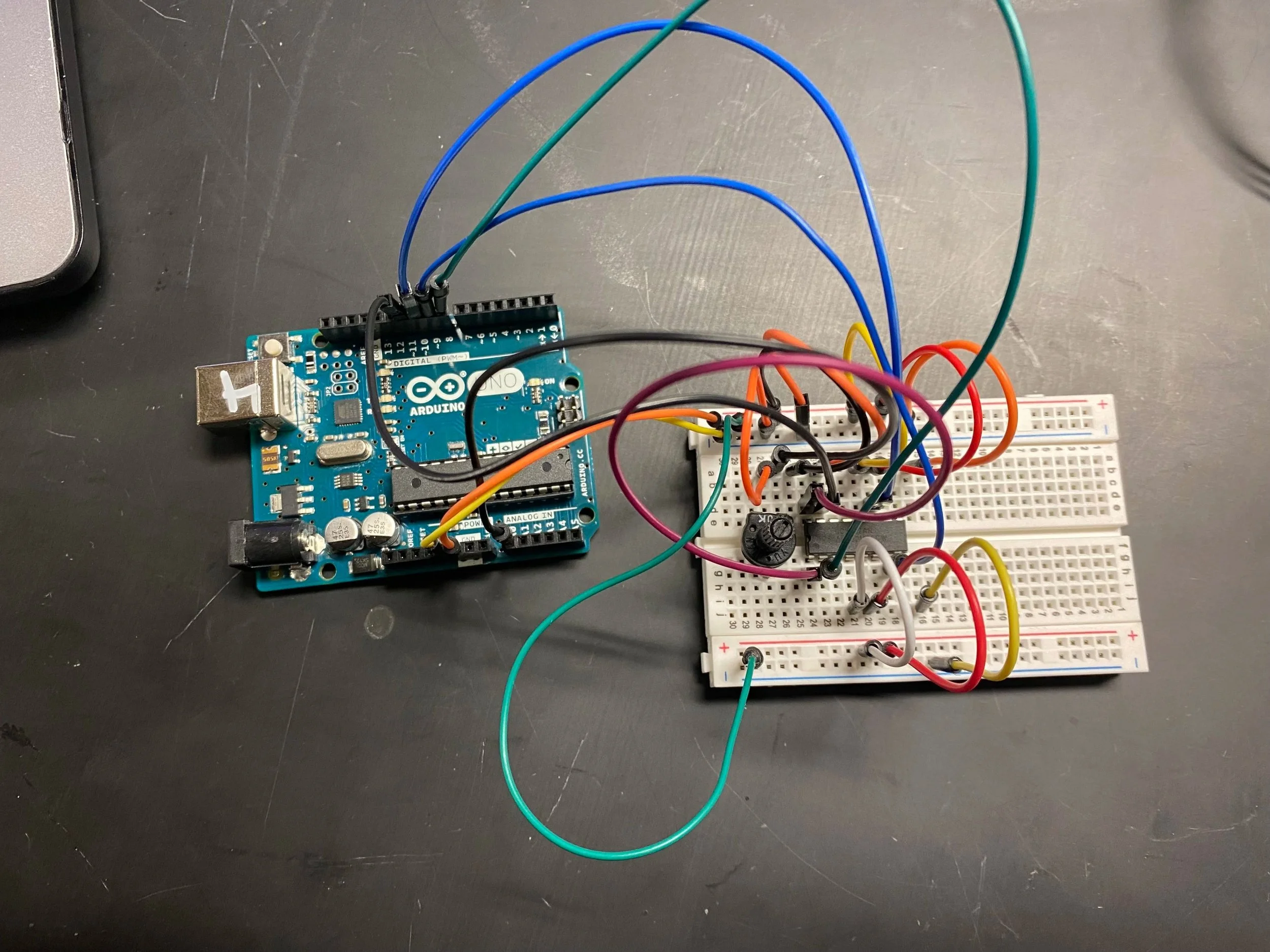
The pressure signal was very small, less than 1 mV in some tests, so the system needed more than a basic Arduino reading. We explored a circuit using a pressure sensor, filtering, and an instrumentation amplifier to isolate and amplify the small differential pressure signal. The electronics were prototyped on a breadboard and connected to a microcontroller that controlled the alarm states.
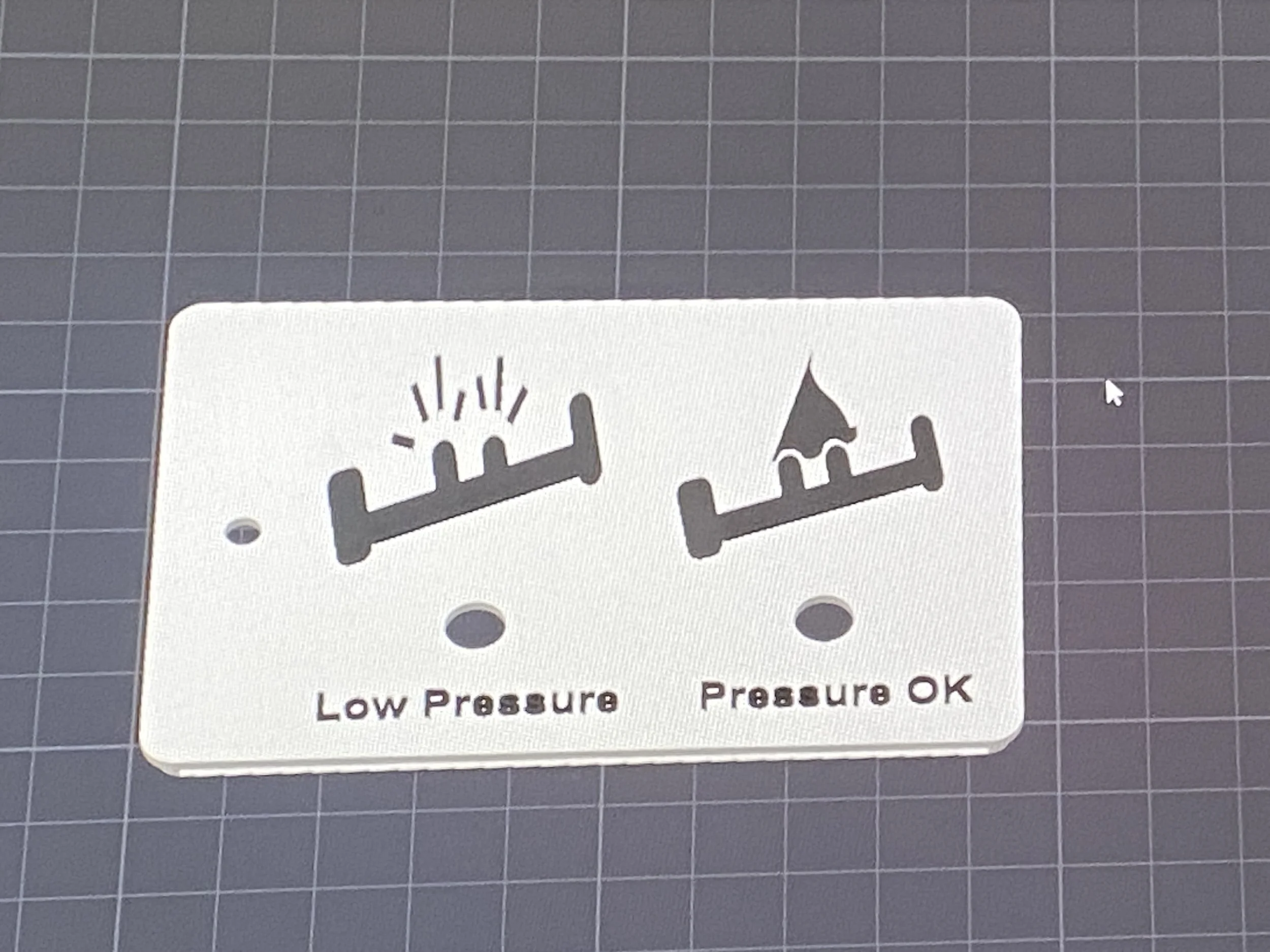
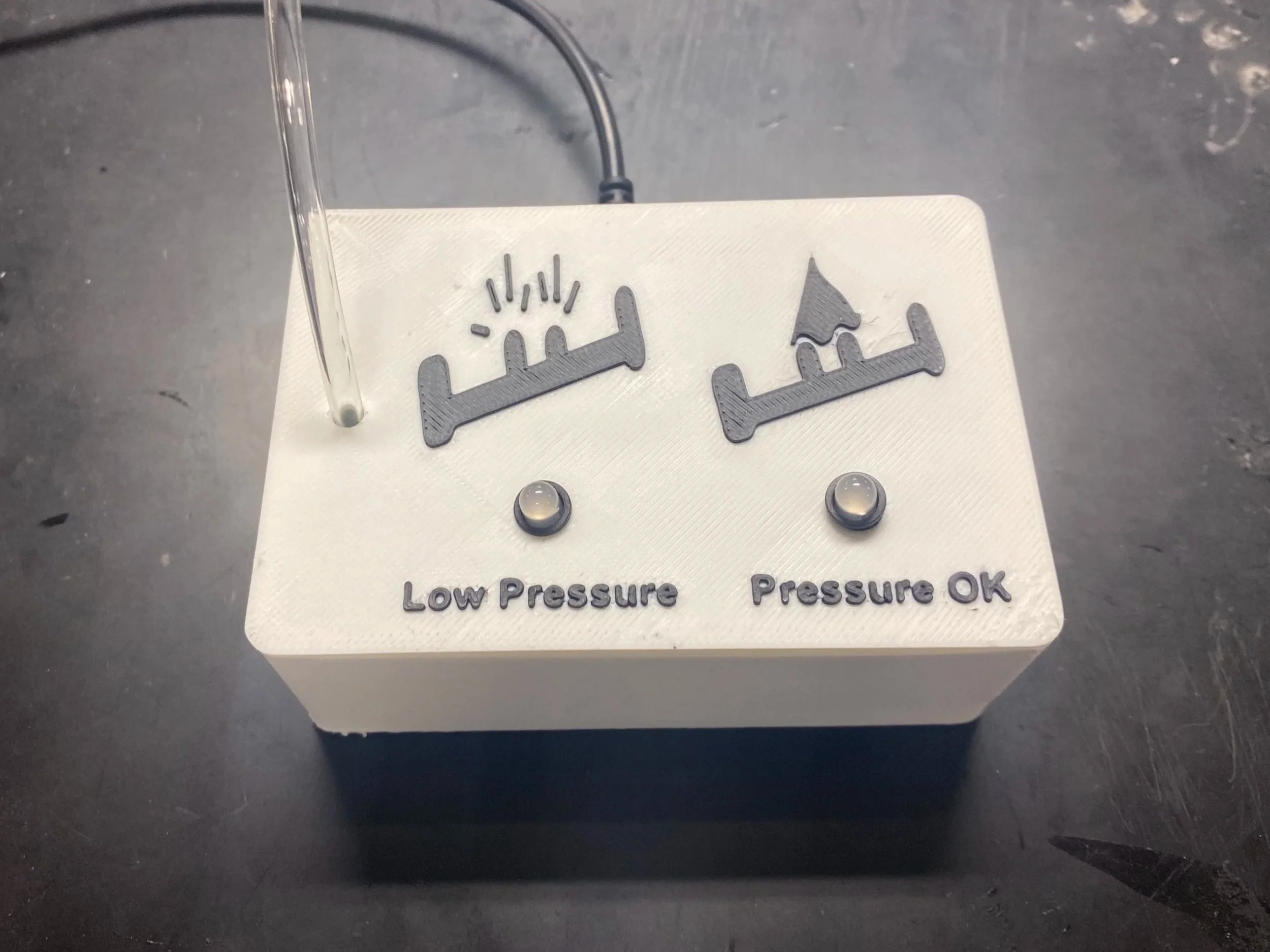
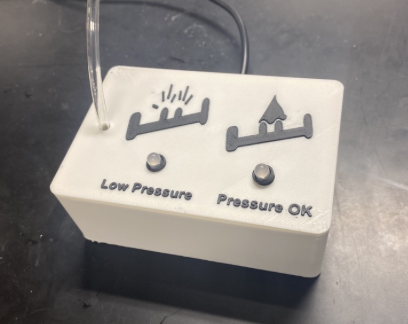
This solution also shaped the physical device design. We created a 3D printed electronics housing that mounted to the Pumani bubble CPAP using Velcro dots. The housing included tubing connections, space for the sensor and electronics, and two LED indicators. A green LED indicated adequate pressure, while a flashing red LED indicated low pressure. The device used a 5V supply and a power splitter so it could share power with the existing Pumani system.
Results and Next Steps
The final prototype met several of our main goals. It was inexpensive, easy to mount, simple to understand, and able to demonstrate the alert concept. The total material cost was estimated at $78.48, keeping the design under the $80 cost target. However, the pressure sensing still needed improvement before the device could be considered reliable for real clinical use.
The biggest next step would be selecting a more sensitive and stable pressure sensor that can detect small pressure differences near atmospheric pressure. Future work should also include moving from the breadboard to a PCB, adding Raspberry Pi or microSD-based data storage, and testing the monitor with other common bubble CPAP systems. Additional durability and compatibility testing would also be needed before clinical deployment.
Key Takeaways
This project gave me hands-on experience working across mechanical design, electronics, sensing, fabrication, and user-centered engineering. I learned how to move from early sensor screening to data-driven design decisions, and I saw how important it is to test assumptions instead of relying only on an idea that seems promising.
The most valuable part of the project was learning how to connect experimental data to design iteration. I used an oscilloscope and MATLAB FFT analysis to understand sensor behavior, helped fabricate and test multiple prototype versions, and worked on the physical housing and user interface that made the device easier to use. The project strengthened my skills in prototyping, signal analysis, sensor integration, design for low-resource settings, and communicating technical tradeoffs clearly.
Rice Robotics Club - University Rover Challenge
Rice Robotics Club - Lunar Rover
Bubble CPAP Monitoring for Neonates
AUV Trim Weight System Design and Analysis
Analog and Digital Control of an Inverted Pendulum
Multi-body Dynamics Simulation of a Soccer Kick
Chess GPT: The Self Playing Chessboard
Custom DC Motor